Kiu Kim, Investment Director at Beringea, on why trust and unit economics make Cycle Exchange a standout circular-economy platform for cyclists.
Buying a premium bike second-hand should feel like the smart option. You get serious performance for a fraction of the new price. But in reality, many riders still hesitate.
The reason is simple: uncertainty. Condition isn’t always clear. The buying process can be inconsistent. And the reassurance rarely matches the value of the purchase.
Cycle Exchange is changing that. It’s building a retail-grade experience for premium pre-owned bikes. One that combines the value of pre-owned with the confidence of buying new. That focus on trust, backed by strong operational execution, is what drew us to the business.
Since we first met Matt Connelley, almost a year before our investment, what stood out wasn’t just the idea. It was the people and the culture behind it.
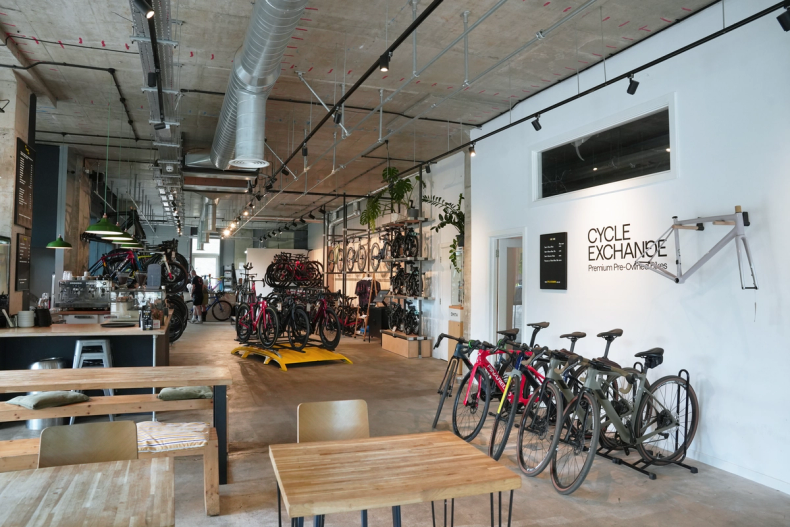
Over our site visits to the Kingston bike café and showroom, we saw the operating engine up close. The workshop, warehousing, and refurbishment flow. The team’s passion for bikes borders on obsession, in the best possible way. “All of us here, we just want to be around bikes all day.” It sounds lighthearted, but it captures something real about how the company runs.
In August 2025, Beringea invested £2.4m in Cycle Exchange to support its next stage of growth. Here’s what convinced us.
1. Trust is the product and Cycle Exchange delivers it
In premium resale, trust isn’t a “nice to have.” It’s part of the product. If a customer is spending thousands on a bike, they rightly want certainty on condition, authenticity, and after-sales support. Without that, most people won’t take the risk.
Cycle Exchange takes full responsibility for the product and the customer experience. It isn’t a thin marketplace connecting the buyer and seller and then stepping away. Bikes are sourced through multiple channels, including trade-ins, ex-demo stock, and direct relationships with brands and partners across the cycling ecosystem. Once acquired, each bike goes through a comprehensive inspection and refurbishment process led by professional mechanics at the Kingston sales and refurbishment centre. The bar is uncompromising. If the workshop team isn’t absolutely certain a bike will perform in like-new condition, they won't allow it to be listed. No exceptions.
The outcome is a fundamentally different purchase. On my first visit, standing in the showroom, I genuinely couldn’t tell which bikes were pre-owned and I asked where the second-hand ones were. Every bike is fully serviced and prepared before it’s listed and comes with a 12-month warranty and 14-day returns. These guarantees create certainty that you simply cannot get elsewhere.
That trust is reinforced with credibility too. The Kingston site (close to Richmond Park and its many cyclists) is more than a refurbishment and sales centre. It includes a bike café and event space that has become a genuine hub for cyclists. That community presence matters. It makes the brand real, and it compounds long-term trust in a way performance marketing cannot.
2. ROI on working capital is the north star
At Beringea, we’ve worked with some exceptional circular and resale businesses, and one characteristic stands out: the winners pair trust with disciplined unit economics.
For resale businesses that buy and hold inventory, a key metric we focus on is ROI on working capital, which we think about as: ROI = gross margin × inventory turnover
It’s intuitive. You don’t just “make a margin.” You make it every time you turn inventory. If you can combine strong gross margin with fast, reliable turns, you build a capital-efficient engine that can scale.
Cycle Exchange’s model blends attractive gross margins with good inventory cycles across procurement, refurbishment, and listing. In our analysis, Cycle Exchange’s ROI stood out as very attractive, with clear room to improve further as the business scales. I won’t go into CE's specific numbers here, but the direction of travel is what matters.
The key lever is procurement. It sets the unit economics in motion. It determines the starting point on margin, quality, and velocity.
As the business scales, procurement can become even sharper. Better data improves buying decisions. Better workflows reduce processing time. Over time, proprietary and data-driven pricing automation can further increase the pace of the process. When you combine that with a strong refurbishment engine, ROI can improve meaningfully.
This is the compounding effect we look for: trust drives demand, which drives throughput, which improves turns, which improves ROI, which funds more growth.
3. The market is ready for a leader
The UK cycling market is large and evolving. New-bike sales are around £1bn annually, and the mix has shifted meaningfully towards higher-value categories, especially e-bikes and premium enthusiast bikes. The premium segment alone is commonly estimated at £200m–£250m in the UK.
Despite that scale, premium pre-owned has remained surprisingly fragmented. A lot of transactions still happen through informal channels where quality is inconsistent, pricing is opaque, and buyer confidence varies widely.
That fragmentation is the opportunity.
The category doesn’t need “another place to list a bike.” It needs a scaled, trusted destination that makes premium pre-owned feel safe, simple, and repeatable. That requires operational infrastructure, not just a website.
Cycle Exchange has built the hard parts early: refurbishment capability, service standards, and a proposition designed around reassurance. It’s also built credibility through partnerships with respected names like Pinarello, Brompton, and British Cycling.
We believe that combination of operations + brand + trust, positions Cycle Exchange to become the destination for premium pre-owned bikes in the UK and beyond.
4. Why Beringea, and why now
Resale is not new territory for Beringea. We’ve backed specialist platforms that reshaped high-value pre-owned categories, including Watchfinder (acquired by Richemont) and MPB (now a global leader in pre-owned photo and video equipment). Those journeys reinforced a simple lesson: premium resale doesn’t scale by chasing growth for its own sake. It scales when trust is built into the operating system so quality, service, and unit economics improve together.
That’s the playbook we see in Cycle Exchange. It’s why we were excited to support Matt and the team with this investment. The focus now is to accelerate digital growth, expand physical presence selectively, and increase selection and availability - without compromising the standards that make the model work.
And customers respond to that standard. Cycle Exchange’s advocacy is exceptional: 4.9/5 on Trustpilot from 1,800+ ratings. Read a handful and the theme is striking: many riders say they won’t buy new again. That’s the ambition here. Cycle Exchange isn’t only trying to be the best way to buy a pre-owned bike. It’s aiming to be the better way to buy a premium bike, period.
We’re proud to be backing Matt and the team as they scale Cycle Exchange across the UK and help more cyclists buy, sell, and ride within a truly circular economy. If you’re in South West London, I’d encourage you to visit the Kingston site near Richmond Park. Great bikes, great people, (and great coffee!).